Handling cash flow and monitoring revenue and loss are crucial areas of work for accountants. It's also their job to supply and explain financial info to the people in organisations who supervise of technique. Graduates and school leavers typically begin in these areas of accountancy (some, such as guarantee and audit, can overlap): advisory (offering guidance to a business about how to conquer monetary obstacles) assurance (evaluating a business's financial details to reassure shareholders that their cash is being put to good use) audit (doing a monetary health check on an organisation) tax (advising services and individuals about just how much tax they require to pay) There are likewise other professional areas of work in accountancy, such as: For more information of any of these areas of work, click on the links above. You can then add details about why the role of a graduate in financial investment banking interests you, highlighting particular abilities you would like to learn or employ. Ensure to indicate you understand what operating in financial investment banking is like, such as mentioning the hours, fast-paced environment or determined colleagues. Show that you are Great site fit to these conditions with company examples. Your answer must be relatively succinct, so invest some time practising with a friend or household member to help you keep it short and feel confident in what you're stating." I desire a profession in investment banking due to the fact that, throughout my placement at university, I dealt with a regional financial firm and watched one of their financiers.
I want to now step up and operate in a faster-paced, higher-profile environment and add to assessments that will lead to larger offers."" I wish to work in investment banking due to the fact that when I was younger, my moms and dads would typically invest percentages in companies they liked. I became interested in their options and started to invest percentages myself. Evaluating the details that would assist me make great investments was remarkable. Now I desire to develop my technical abilities in monetary modelling, to find out about what it takes to make great financial investments. I'm prepared to put the hours in to make this occur."" I desire to be a financial investment lender since, throughout my degree, I have actually found it most fulfilling when I used my mathematical abilities in real-world settings.
The experience you'll acquire in the financial market is second-to-none, making financial investment banking an what happens if you stop paying maintenance fees on a timeshare interesting choice if you have strong mathematical, analytical and monetary abilities. Answering the question "Why investment banking?" is hard because it's extremely open. However it is essential to keep in mind your recruiter is looking for how well you understand the market, the role you're looking for and yourself. The most successful candidates will be able to construct an unique and developed answer. To get to that level, think about the following: The development and advancement chances available to graduates in investment banking; Learning about structuring M&A deals, strategic advisory services, and other elements of financial investment banking; The transactional nature of the service; The instructional experience and world-class training; Establishing a fuller, more well-rounded business acumen; How your previous hobbies and previous activities demonstrate your interest in financing.
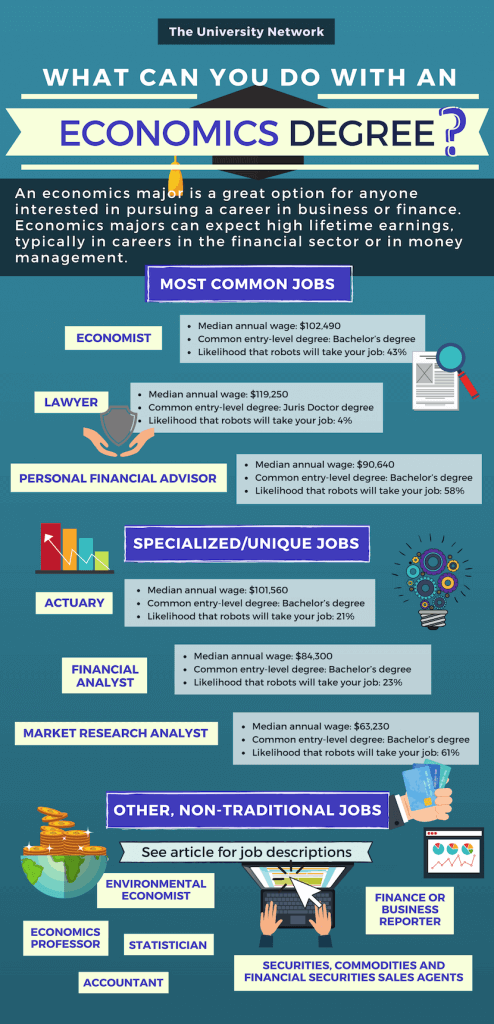
Financing can be an increasingly competitive field to break into. After all, it's a famously high-paying market known to pay 6 or seven figures in incomes and bonuses for those at the top. Even those on the bottom rung can expect to start at a great wage compared to other fields. You might not stroll into your dream job right away, but the bright side is that financing is a vast industry, so as soon as you remain in, there's lots of space to develop, move around, and discover your specific niche. Initially, nevertheless, you have to get your foot in the (entry-level) door.
The National Association of Colleges and Employers' (NACE) Winter 2020 Wage Study projects starting paychecks in the finance, insurance coverage, and property fields for the class of 2020 to range from $56,750 to $62,500 each year, as of Jan. 21, 2021. To get a sense of how high an income is: the median U.S. family income was $68,703 in 2019. And in the 4Q of 2020, the typical specific income was $984 per weekaccording to the Bureau of Labor Stats (BLS). What's more, the BLS approximates that employment in business and financial operations occupations is predicted to grow 5% from 2019 to 2029faster than the general average for professions.
The Bureau of Labor Stats estimates that financing sector jobs are forecasted to grow 5% from 2019 to 2029. You do not need an Ivy League background to get in on the financing action, but a bachelor's degree is required at the minimum, and economics- or math-oriented majors are more suitable. The most popular entry-level tasks include analysts, tax associates, auditors, and financial advisors. However how do you go about it? Well, fortunately is you do not need a Harvard Business School degree. It is often preferable to have several years of financial or business work experience before acquiring an MBA.
While companies claim they work with majors of all types, ideally, your academic background needs to demonstrate your capability to understand and deal with numbers. That requires knowledge of economics, used mathematics, accounting, business, and computer technology. Interestingly, the NACE study found that breaking down monetary sector salaries by significant focusing on engineering and computer technology realized the greatest settlement and those in sales and interaction the lowest. If your primary major remains in a various field, try to minor in something finance-related - How to finance a car from a private seller. Much more vital are internships. Many companies go to schools to recruit for summer season internships or hold seminar, workshops, or networking chances.